Commercial Packaged AC Unit Buying Guide: How to Specify the Right Rooftop Unit
Complete guide to specifying commercial packaged AC units. Covers tonnage sizing, phase selection, SEER2 ratings, refrigerant choice, and brand comparison.

Packaged Unit vs Split System
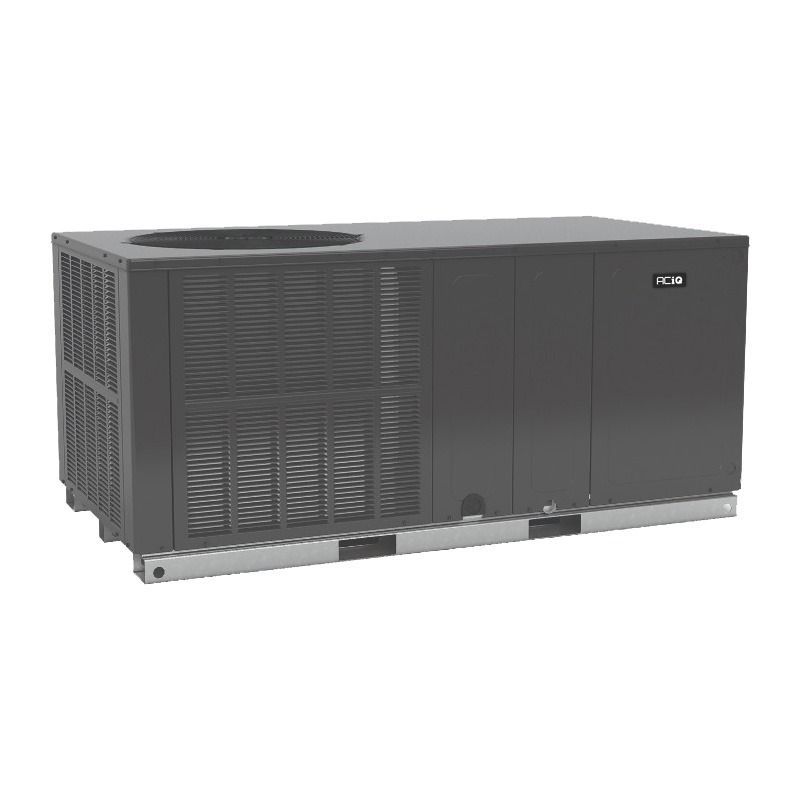
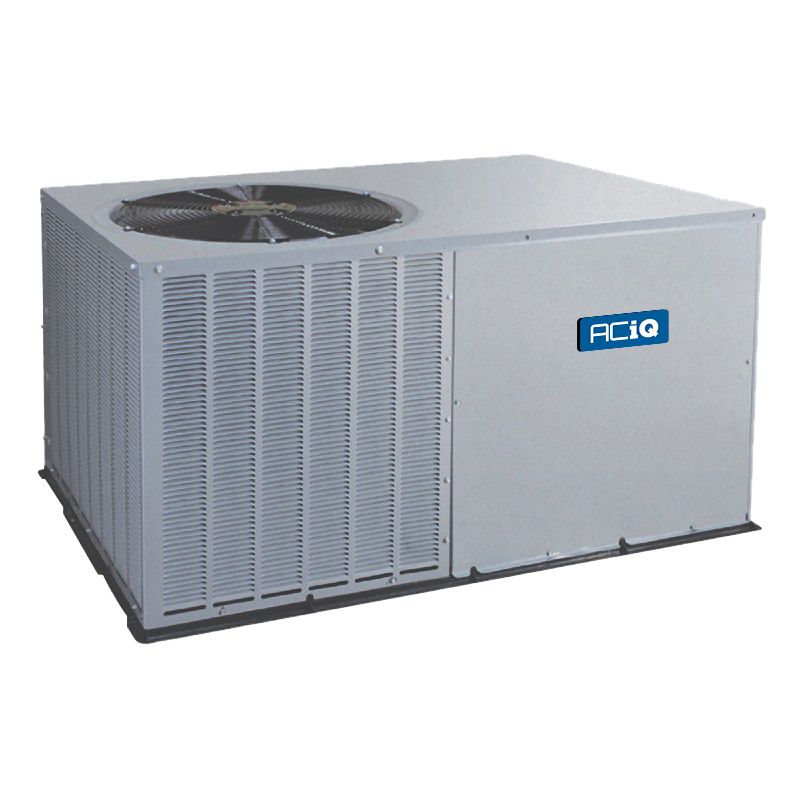
A packaged unit contains all components — compressor, condenser, evaporator, and air handler — in a single outdoor cabinet. Typically roof-mounted or on a ground-level pad. A split system has a separate outdoor condenser and indoor air handler connected by refrigerant lines.
Commercial packaged units are preferred for rooftop applications where interior mechanical room space is limited. They simplify installation, reduce refrigerant piping, and are easier to service.
Rooftop vs Ground-Level Installation
Most commercial packaged units are installed on rooftops using roof curb adapters. Ground-level pad installations are used when roof access is limited or structural loading is a concern. Both configurations use the same equipment — the difference is in the mounting and ductwork routing.
Tonnage Sizing
Commercial HVAC tonnage is determined by building heat load calculations (Manual J for residential, Manual N for commercial). As a rough guide, commercial buildings require approximately 400-600 square feet per ton of cooling capacity, depending on climate zone, building envelope, internal heat gains, and occupancy.
ClimateProDirect carries packaged units from 1 ton through 25 tons, covering small retail spaces to large commercial buildings.
Phase Selection
Single-phase (208-230V): Suitable for smaller commercial applications up to approximately 5 tons. Uses standard commercial electrical service.
Three-phase (208-230V or 460V): Required for larger commercial applications, typically 5 tons and above. More efficient motor operation and lower operating costs at higher tonnages.
SEER2 Rating Requirements
SEER2 replaced SEER in January 2023. The updated standard uses higher external static pressure (0.5 inches WC vs 0.1 for SEER), resulting in ratings approximately 5% lower than comparable SEER ratings. National minimum for commercial packaged units is 13.4 SEER2.
Refrigerant Selection: R-32 vs R-454B
Under AIM Act requirements, new commercial equipment uses either R-32 (Daikin) or R-454B (Carrier, Goodman, ACiQ, Trane). Both are A2L classified and AIM Act compliant. Your refrigerant choice is primarily determined by your brand preference.
Gas/Electric vs Heat Pump vs Cooling-Only
Cooling-only packaged AC: Electric cooling with no heating. Used where heating is provided by a separate system.
Gas/electric: Gas furnace for heating, electric compressor for cooling. Preferred in colder climates.
Heat pump: Electric heating and cooling using reverse-cycle operation. Most efficient in moderate climates.
Brand Comparison
Browse our complete selection by brand: Daikin (R-32, 1-25 ton), Goodman (R-454B, competitive pricing), and Trane (R-454B, strong contractor network). All units include AHRI certification and full manufacturer warranty.